Tenant Improvement Build-Out in Fort Lauderdale, FL
TI projects have tight budgets, tight timelines, and landlords watching every detail. We handle tenant improvement build-outs in Fort Lauderdale with the speed and discipline these jobs demand.
Licensed
4.8-Star Rated
Free Estimates
Tenant Improvements That Hit Deadlines and Specs
Tenant improvement build-outs in Fort Lauderdale are where commercial real estate's promise meets construction reality — and where the contractor's ability to deliver on time and on budget determines whether a landlord fills their vacancy or a tenant opens their business on schedule. TI build-outs are the backbone of Fort Lauderdale's commercial construction market, converting raw commercial space into functioning offices, retail stores, medical suites, restaurants, and service businesses every month throughout Broward County. At Planet Construction FL, TI build-out is where we do our best work — organized, efficient, deadline-driven, and delivered with the finish quality that supports both the tenant's brand and the landlord's asset.
TI Projects Live or Die on Schedule and Budget
Tenant improvement projects don't have margin for error. Your TI allowance is fixed, your move-in date is locked, and your landlord has standards that don't bend. When a contractor mismanages a TI, the tenant ends up paying out of pocket, missing their opening, or both. The whole point of the build-out — getting into a space that helps the business grow — gets buried under stress and overruns.
Tenant Improvements Delivered On Time, On Budget
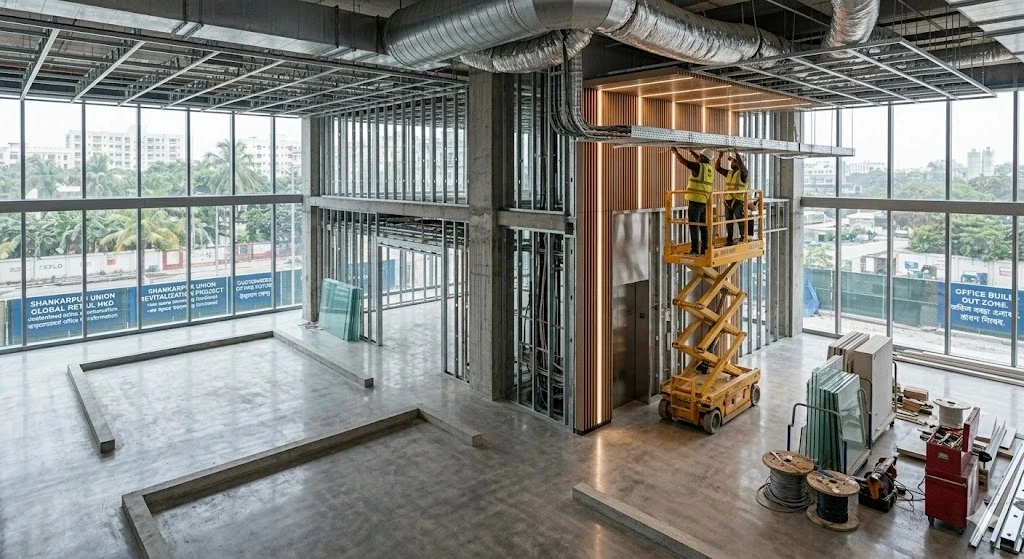
We deliver tenant improvement build-outs in Fort Lauderdale by treating your TI allowance and move-in date as hard constraints — not suggestions. Detailed scopes, locked-in pricing, weekly progress meetings, and clean coordination with the landlord. Demising walls, finishes, MEP, lighting, and final inspections all run on schedule. The result is a build-out you walk into ready to operate.
What Are Tenant Improvements?
Tenant improvements — also called TIs, leasehold improvements, or build-outs — are the construction work performed to customize a commercial space for a specific tenant's use. In a standard commercial lease structure, the landlord delivers the space in a defined condition — ranging from a cold dark shell (utilities not extended into the space) to a warm vanilla box (HVAC, electrical, and plumbing roughed in) — and provides a tenant improvement allowance (TI allowance) to fund the build-out of the space to the tenant's specific requirements. The tenant selects and manages the contractor, and the landlord reimburses construction costs up to the agreed TI allowance amount. Planet Construction FL works within this structure regularly — coordinating directly with landlords and property managers on the allowance disbursement process while executing the build-out to the tenant's requirements and timeline.
TI Allowance Planning — Getting the Most from Your Budget
The TI allowance is typically the largest single variable in a tenant's build-out budget, and maximizing the value delivered within that allowance is a significant part of Planet Construction FL's preconstruction service. We review the lease's TI provisions, identify exactly what the allowance covers and what conditions the landlord has placed on its use, and develop a build-out scope and specification level that delivers a functional, appealing space within the available budget. Where the tenant's requirements exceed the TI allowance, we identify the scope items that are highest priority and develop a phased approach that uses the allowance on the non-negotiable elements and defers or value-engineers the above-allowance items. This budget-conscious approach is particularly valuable in Fort Lauderdale's current commercial market where construction costs have increased significantly relative to TI allowance levels that were set in prior lease cycles.
Design, Permits & Construction Timeline
TI build-outs involve three sequential phases that the tenant and landlord coordinate carefully — design, permitting, and construction. Each phase has a timeline, and the total time from lease execution to tenant occupancy is the sum of these phases. Design typically takes 3–6 weeks for standard office, retail, or restaurant layouts. Permit review in Fort Lauderdale and Broward County typically takes 3–6 weeks for standard commercial TI permits, though complex projects can take longer. Construction takes 4–12 weeks depending on scope. Planet Construction FL advises tenants and their brokers on realistic total timelines at the lease negotiation stage — so the lease commencement date, rent commencement date, and opening date are achievable within the actual construction timeline that the project requires.
Minimizing Downtime for Tenants & Landlords
Every day of TI construction that isn't producing progress is a day the tenant isn't generating revenue and the landlord isn't collecting full rent. Planet Construction FL's TI construction management approach prioritizes schedule efficiency — organizing work sequences to avoid idle time between trade phases, pre-ordering materials before permit approval where appropriate, and maintaining daily supervisor oversight to catch schedule issues before they compound. For landlords managing multiple TI projects in a single property simultaneously, we provide the coordination and communication that keeps multiple simultaneous projects from creating conflicts in common areas, loading docks, and building systems access.
Frequently Asked Questions
Who selects the TI contractor — the landlord or the tenant?
In most Fort Lauderdale commercial leases, the tenant selects and contracts with the TI contractor, subject to landlord approval. Some leases require the tenant to select from a landlord-approved contractor list. A few leases provide that the landlord manages the TI construction and delivers the finished space to the tenant. We work in all of these structures — as the tenant's direct contractor, as an approved contractor on a landlord's list, or as the landlord's build-out contractor delivering space to a new tenant. The specific lease structure is reviewed at the project outset so our contracting arrangement matches the lease requirements.
What happens if TI construction goes over budget?
Costs in excess of the TI allowance are the tenant's responsibility in most lease structures. Planet Construction FL manages the TI construction budget proactively — tracking costs weekly, flagging scope changes promptly, and presenting options for cost reduction before costs exceed the available allowance. Change orders that increase the project cost are presented to the tenant and landlord (where landlord approval is required) with a written cost and schedule impact analysis before the additional work is performed. No scope is added to a TI project without the tenant's written approval of the cost impact.
Can the TI build-out begin before the permit is approved?
In most jurisdictions, construction work requiring a permit cannot legally begin before permit approval. Some Fort Lauderdale landlords allow certain demolition and non-structural work to proceed on a permit-pending basis with their written approval. Planet Construction FL advises each client on what, if anything, can reasonably proceed before permit approval in their specific jurisdiction and building — and we never start permitted work before the permit is in hand.
What is a vanilla box space in Fort Lauderdale?
A vanilla box in Fort Lauderdale's commercial market typically includes concrete floor slab, painted drywall perimeter walls and demising walls, drop ceiling at standard height, HVAC system extended into the space with basic diffuser layout, electrical panel with adequate capacity and basic lighting circuit, and plumbing roughed to a restroom location. The tenant's TI build-out adds interior partitions, specialty mechanical and electrical, flooring finishes, interior doors, millwork, and all tenant-specific improvements. Vanilla box specifications vary by landlord — we review the specific delivery condition with the landlord before finalizing the TI build-out scope and budget.