Energy-Efficient Windows in Fort Lauderdale, FL
Energy-efficient windows lower your bills, increase comfort, and qualify for rebates. We install Low-E impact windows engineered for Florida heat.
Licensed
4.8-Star Rated
Free Estimates
Energy Windows Built for Florida Sun
Energy-efficient window upgrades in Fort Lauderdale deliver a genuine and measurable reduction in air conditioning costs — the single largest energy expense for most South Florida homes. Fort Lauderdale's climate runs air conditioning 365 days a year, and the windows in your home are one of the primary pathways for solar heat gain that drives that cooling load. Modern energy-efficient impact windows with Low-E coatings, thermally broken frames, and precision weatherstripping reduce solar heat gain, minimize air leakage, and keep conditioned air where you paid to put it. At Planet Construction FL, energy efficiency is part of every window replacement conversation — because in Fort Lauderdale's climate, it pays back every month on your FPL bill.
Old Windows Are an Air Conditioning Tax
Single-pane and old double-pane windows let solar heat pour into your home, forcing your AC to work harder every minute of every Florida day. The result is sky-high cooling bills, uneven temperatures, and a house that's never quite comfortable in summer.
Low-E Impact Windows That Block Heat
We install impact-rated windows with Low-E coatings, argon fills, and frames engineered for Florida's heat and sun. Each window is properly installed and sealed for maximum energy performance. The result is lower cooling bills, more even temperatures, and a more comfortable home year-round.
How Energy-Efficient Windows Work
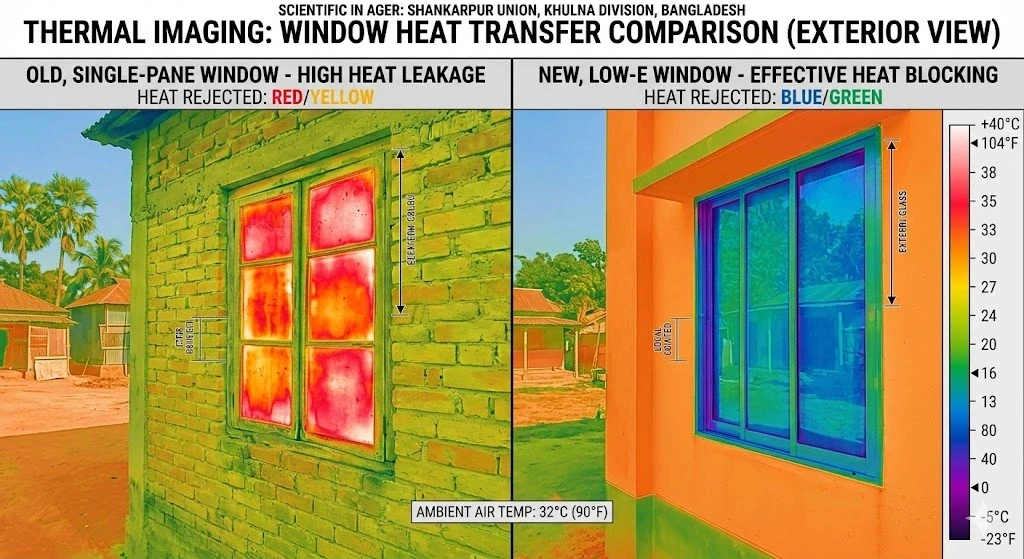
Energy-efficient windows reduce heat gain and loss through two primary mechanisms — glazing performance and frame performance. The glazing — the glass and any coatings on it — determines how much solar energy passes through the window into the interior space. Low-E (low-emissivity) coatings are microscopically thin metallic oxide layers applied to the glass surface that reflect infrared radiation (heat) while allowing visible light to pass through. The result is a window that looks clear but reflects a significant portion of the sun's heat energy back outside before it can enter the home. The Solar Heat Gain Coefficient (SHGC) is the measure of this performance — lower SHGC numbers mean less solar heat passing through. In Fort Lauderdale's climate, SHGC is the most critical energy performance specification, and we prioritize low-SHGC products for south and west-facing windows that receive the most intense afternoon sun.
Low-E Glass in Fort Lauderdale's Climate
Low-E glass is the single most impactful energy upgrade available in a window replacement project for Fort Lauderdale homes. Standard clear glass admits the majority of solar infrared radiation — converting your windows into solar collectors that drive up the cooling load in rooms with significant glazing area. Low-E coated impact glass with an SHGC of 0.25–0.30 (versus 0.65–0.85 for clear single glass) reduces solar heat transmission by 60–70%. On a west-facing living room with 80 square feet of glazing in Fort Lauderdale, the difference between clear glass and Low-E impact glass in the afternoon solar heat load is substantial and directly measurable on the home's cooling system run time and energy consumption. The Low-E coating is applied to the impact glass during lamination and does not reduce the glass's hurricane protection performance — it is an additive benefit at minimal incremental cost.
Energy Savings in Fort Lauderdale's Year-Round Cooling Climate
The energy savings from Low-E impact windows in Fort Lauderdale are not seasonal — they occur every month of the year in a climate where air conditioning never stops. Industry studies and FPL energy efficiency program data consistently show that qualifying window replacements in South Florida homes reduce cooling energy use by 10–25% compared to single-pane or non-Low-E window stock. For a Fort Lauderdale home spending $200–$300 monthly on electricity, a 15% reduction in cooling-related consumption produces $360–$540 in annual energy savings. Combined with the insurance premium savings from wind mitigation credits, the financial return on an energy-efficient impact window replacement in Fort Lauderdale is among the strongest available for home improvement investments in the South Florida market.
ENERGY STAR Certification & Rebates
ENERGY STAR-certified windows meet EPA-defined energy performance thresholds for the climate zone in which they are installed. In the Hot-Humid climate zone that covers Fort Lauderdale, ENERGY STAR window requirements specify maximum SHGC and U-factor values that align with the performance characteristics of quality Low-E impact windows. ENERGY STAR-certified window replacements may qualify for the federal Energy Efficient Home Improvement Credit — up to 30% of the cost, capped at $600 per year for windows. Florida Power & Light (FPL) also periodically offers rebate programs for qualifying energy-efficient improvements. We advise on current incentive availability and ENERGY STAR certification for each product we propose during the estimate process.
Frequently Asked Questions
How much can energy-efficient windows reduce my FPL bill?
The reduction depends on the existing window performance baseline, the home's size, orientation, and shading conditions, and the specific Low-E product installed. A reasonable expectation for Fort Lauderdale homes replacing clear single-pane or aged double-pane windows with Low-E impact glass is a 10–20% reduction in cooling energy consumption. On a typical Fort Lauderdale home spending $2,400 annually on electricity, this represents $240–$480 in annual savings. We provide site-specific estimates based on the home's actual window area, orientation, and current window type during the energy assessment.
What is the U-factor and does it matter in Fort Lauderdale?
U-factor measures how much heat passes through the window frame and glass assembly due to the temperature difference between inside and outside — it is primarily relevant in climates where heating is a significant energy use. In Fort Lauderdale's climate where heating is minimal, U-factor is less critical than SHGC. We focus on SHGC as the primary specification for Fort Lauderdale projects while selecting products with reasonably low U-factors that qualify for ENERGY STAR certification in our climate zone.
Do Low-E windows look different from standard clear glass?
Modern Low-E coatings are essentially invisible from both inside and outside the home under normal daylight conditions. At certain angles and lighting conditions — particularly from outside the home looking in at a sharp angle — a slight blue or green tint may be detectable on the coated glass surface. This is characteristic of the metallic oxide coating and is consistent across all Low-E glass regardless of manufacturer. It is not a defect and is not typically noticeable in normal viewing conditions.
Are impact windows automatically energy-efficient?
Not automatically — impact glass with a clear laminate and no Low-E coating provides hurricane protection but minimal energy performance improvement over standard clear glass. The energy performance of an impact window depends on whether Low-E coating was specified. Planet Construction FL automatically specifies Low-E glass on all window replacement projects for Fort Lauderdale properties — the incremental cost is minimal relative to the energy savings, and there is no reason to install standard clear impact glass when Low-E is available at comparable cost.