Stucco Repair in Fort Lauderdale, FL
Cracked or bulging stucco usually means moisture is hiding behind the surface. We repair stucco in Fort Lauderdale by fixing the actual cause — not just the symptom.
Licensed
4.8-Star Rated
Free Estimates
Stucco Repairs That Solve the Real Problem
Stucco repair in Fort Lauderdale is one of the most frequently needed exterior maintenance services on the South Florida residential and commercial market — because virtually every building clad in stucco develops cracks, damage, and delamination over time in Fort Lauderdale's thermal cycling, salt air, and hurricane-season weather. What separates a lasting stucco repair from one that fails again within a year or two is the approach: proper diagnosis of why the damage occurred, complete removal of all compromised stucco before new material is applied, and a repair that addresses the moisture source that caused the problem rather than just patching the surface symptom. At Planet Construction FL, stucco repair is done right — or not at all.
Cracked Stucco Is Almost Never Just Cracked Stucco
When stucco cracks, bulges, or sounds hollow, the visible damage is rarely the actual problem. The real issue is almost always behind the surface — failed flashing, water intrusion, rusted lath, or substrate damage that's been growing quietly for years. Skim-coating over the symptom looks good for one season and then fails again, often worse than before, because the moisture source was never addressed. The damage keeps spreading inside the wall while the patch sits on top.
Stucco Repair That Treats the Cause and Restores the Finish
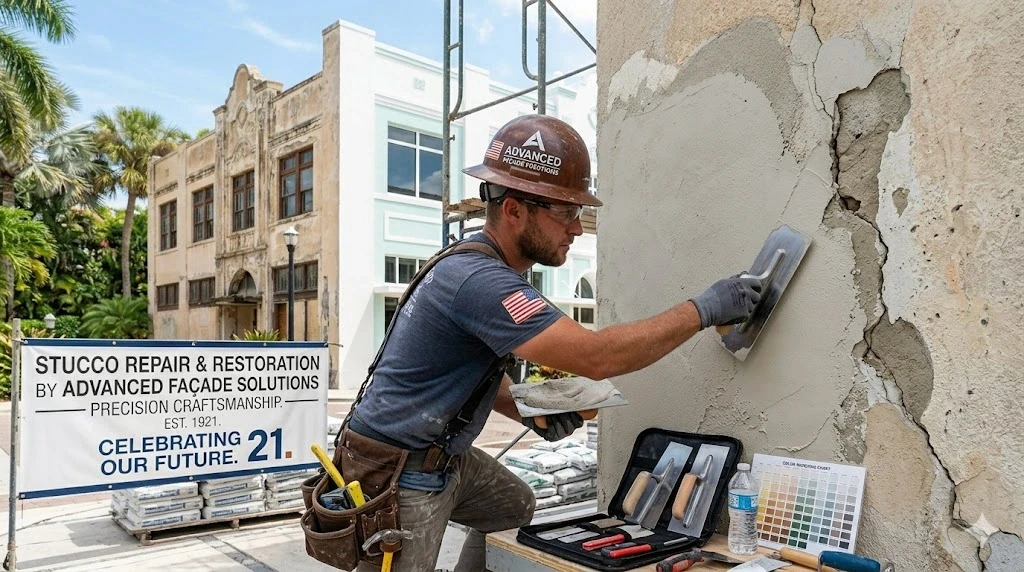
We start by finding the moisture source — failed flashing, bad caulking, water intrusion behind windows or trim — and we fix it before we touch the stucco. Then we cut back to sound substrate, repair lath and weather barrier as needed, and rebuild the stucco in proper coats. The finish is matched to the existing wall so the repair blends in and stays put for years.
Common Stucco Problems in Fort Lauderdale
Fort Lauderdale stucco damage follows recognizable patterns that reflect the specific climate and construction conditions of South Florida. Hairline alligator cracking — a fine network of surface cracks that resembles alligator skin — is one of the most common conditions, typically indicating that the stucco has aged past its flexibility and become brittle from years of UV exposure and thermal cycling. Larger diagonal cracks at window and door corners indicate structural movement or thermal expansion stress that the stucco cannot accommodate. Delamination — stucco that separates from the wall substrate and produces a hollow sound when tapped — means moisture has broken the bond between the stucco coats or between the stucco and the underlying block or lath. Efflorescence — white crystalline deposits on the stucco surface — signals that water is moving through the wall assembly and carrying mineral salts to the surface. Each of these conditions requires a specific diagnosis and repair approach.
Repair vs. Full Re-Stucco
Not every stucco problem requires full re-stucco — and not every stucco problem can be permanently resolved with a patch repair. Isolated cracks and small delaminated areas in otherwise sound stucco are well-suited to targeted patch repair — removing the compromised material, preparing the substrate, and applying new stucco in matching coats. When delamination covers more than 30% of a wall area, or when the existing stucco system is at or past its service life, full removal and re-stucco is more cost-effective than patching a system that will continue to fail in adjacent areas. Planet Construction FL provides an honest assessment at the estimate stage — recommending the approach that serves the building's long-term performance, not the approach that generates the most immediate project revenue. We'll tell you when a patch repair is the right answer and when it isn't.
Our Stucco Repair Process
Stucco repair at Planet Construction FL begins with a thorough assessment — sounding all delaminated areas by tapping, mapping all cracks by type and location, inspecting window and door flashings for failure, and identifying moisture sources that may be driving ongoing damage. All compromised stucco is removed to the full boundary of delamination, not just to the edge of visible damage — leaving questionable material under a new patch creates a short-lived repair. The underlying substrate — concrete block, concrete, or metal lath on wood framing — is inspected and repaired if moisture damage is present. New stucco is applied in the proper coat sequence for the substrate type, with appropriate curing time between coats. The finish coat is textured to match the surrounding surface, and the repair area is painted with an elastomeric coating that provides waterproofing and matches the existing wall color.
Color & Texture Matching
The visual success of a stucco repair depends on matching both the texture and the color of the surrounding wall surface — a technically correct repair that looks like a patch is still a poor result. Planet Construction FL's crews have extensive experience in the range of stucco textures used on Fort Lauderdale buildings — sand finish, dash, skip trowel, and smooth — and our applicators match the existing texture by hand using the same tools and techniques used in the original application. Color matching for the final paint coat is achieved using the existing wall color as reference, with spectrophotometer color matching where needed for precision. On aged and sun-faded exterior surfaces, achieving perfect color invisibility isn't always possible — UV exposure changes paint color over time, and new paint will always be slightly brighter than weathered adjacent areas. We discuss realistic color matching expectations for each project at the estimate stage.
Frequently Asked Questions
Why does my stucco keep cracking in the same spots?
Recurring cracks in the same locations typically indicate an ongoing movement or moisture condition that isn't being addressed at the repair stage. Diagonal cracks at window and door corners are driven by the differential thermal movement between the window frame and the surrounding wall — they will recur unless a control joint or flexible sealant is installed at those locations to accommodate the movement. Cracks along horizontal building elements — floor lines, ledges, and sills — often reflect water infiltration from above that is keeping the underlying substrate wet and creating cyclic movement. Addressing the movement or moisture source is the only way to stop recurring cracks from returning after repair.
Does stucco repair include waterproofing?
Stucco patch repair alone doesn't include a separate waterproofing system, but the repair process should address the moisture source that caused the damage and should include an appropriate protective coating as the final step. Where a stucco repair project reveals evidence of chronic moisture infiltration — saturated substrate, significant efflorescence, or recurring damage pattern — Planet Construction FL recommends an elastomeric waterproofing coating as part of the repair scope to prevent future moisture penetration through the repaired and surrounding surfaces.
How long does stucco repair last?
A properly executed stucco patch repair — full removal of compromised material, sound substrate, correct mix applied in proper coats, with an elastomeric final coat — should last the remaining service life of the surrounding stucco, typically 10–20 years. Patch repairs that don't remove all delaminated material, don't address the moisture source, or apply incompatible new materials over old typically fail within 2–5 years. The preparation quality of the repair is far more predictive of its longevity than the specific stucco product used.
Can stucco be repaired in any weather in Fort Lauderdale?
Stucco application requires dry conditions and temperatures above 40°F — not typically a concern in Fort Lauderdale, but relevant during rare cold fronts. The primary weather constraint is rain: stucco cannot be applied if rain is imminent within 24–48 hours of application, as premature wetting before the stucco has achieved initial set can wash the surface and cause failure. Fort Lauderdale's dry season (November–April) provides the most reliably suitable conditions for stucco repair; rainy season projects are scheduled around the forecast weather patterns.