Below-Grade Waterproofing in Fort Lauderdale, FL
When water gets into basements, foundations, or below-grade walls, the damage is hidden until it's serious. We waterproof below-grade structures from the right side, with systems engineered for hydrostatic pressure.
Licensed
4.8-Star Rated
Free Estimates
Stop Water Where It Starts — Below the Surface
Below-grade waterproofing in Fort Lauderdale confronts one of the most challenging conditions in South Florida construction — a water table that in many Fort Lauderdale locations sits just two to four feet below grade, combined with annual rainfall that saturates soil repeatedly and intensely. Any below-grade structure — foundation walls, underground utility vaults, below-grade storage areas, or enclosed parking in low-lying areas — faces constant hydrostatic water pressure that actively pushes water through any crack, joint, or porous concrete section it can find. At Planet Construction FL, we install below-grade waterproofing systems designed to withstand this pressure — keeping below-grade spaces dry regardless of what's happening in the soil outside.
Below-Grade Leaks Are the Hardest to Fix Later
Water below grade doesn't just seep — it pushes against walls and slabs with hydrostatic pressure that finds every weak point. Once water is inside, it damages finishes, breeds mold, and corrodes any embedded steel. Interior fixes treat symptoms; the only real solution is exterior or specialized interior waterproofing applied to the right side of the wall, which is rarely a small job once damage is already happening.
Below-Grade Waterproofing That Resists Hydrostatic Pressure
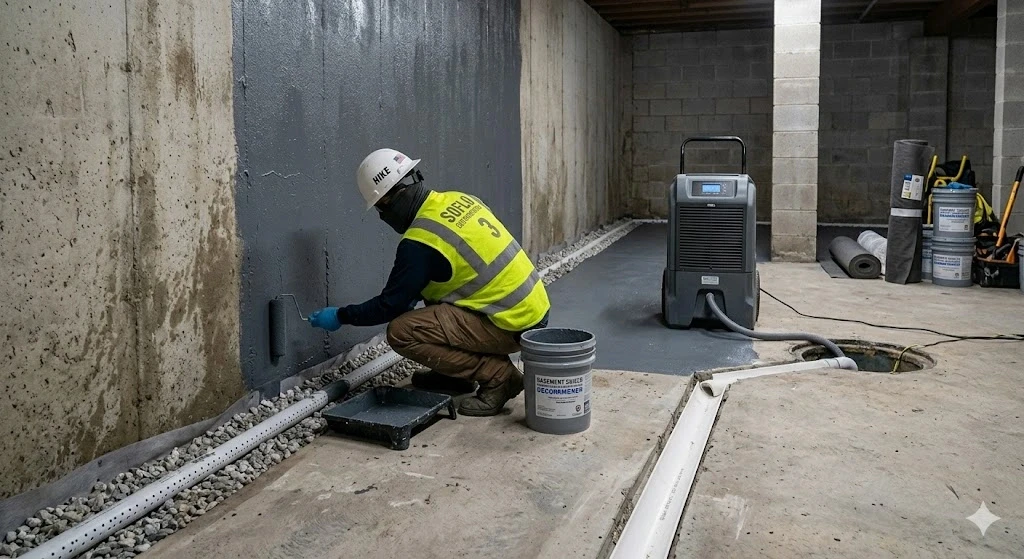
We assess water sources, soil conditions, and existing damage before specifying a system — exterior membrane application, crystalline injection, or interior negative-side coatings depending on the situation. Drainage is corrected where needed, because waterproofing alone can't fight standing water. Every system is engineered for the specific exposure and documented for your records.
What Is Below-Grade Waterproofing?
Below-grade waterproofing refers to moisture protection systems applied to building elements that are at or below the finished grade level — foundation walls, basement slabs, below-grade utility rooms, underground cisterns, and any structural element in contact with or buried in the soil. Unlike above-grade waterproofing where gravity helps drain water away from the surface, below-grade waterproofing must resist active hydrostatic pressure — water that is pressing against the exterior of the structure with a force proportional to the depth of the water table and the soil saturation level. In Fort Lauderdale's conditions, this pressure can be significant even in structures that are only partially below grade.
Florida Water Table Challenges
Fort Lauderdale's water table conditions create below-grade waterproofing challenges that are more demanding than in most North American markets. The Biscayne Aquifer, which underlies most of South Florida, is one of the most productive and shallowest aquifers in the United States — meaning groundwater is always close to the surface and always present. Seasonal rainfall events and tropical storms temporarily raise the water table further, placing additional hydrostatic pressure on below-grade structures for extended periods after major rain events. The soil is primarily sandy and highly permeable, meaning water moves rapidly through it to the base of any below-grade structure. For property owners in Fort Lauderdale's lowest-lying areas — near canals, the Intracoastal, or coastal flood zones — below-grade waterproofing is not an amenity: it is structural necessity.
Below-Grade Waterproofing Methods
Planet Construction FL installs below-grade waterproofing using three primary approaches, selected based on whether exterior access to the foundation wall is possible and the type of moisture condition being addressed. Positive-side waterproofing — applied to the soil-facing side of the foundation wall — is the most effective approach, using sheet membranes, liquid-applied membranes, or bentonite clay systems that create an external moisture barrier. This requires excavation to expose the foundation wall exterior. Negative-side waterproofing — applied from the interior — uses crystalline waterproofing compounds that penetrate the concrete matrix and chemically react to form water-blocking crystals throughout the wall's thickness. This is the preferred approach where excavation isn't feasible. Drainage systems — interior perimeter drains, sump pumps, and exterior French drains — manage groundwater before it reaches the structure, reducing the hydrostatic pressure that drives infiltration.
Crystalline Waterproofing for South Florida Foundations
Crystalline waterproofing has become a preferred below-grade solution in South Florida's construction market because of its unique capability to perform without exterior access. Crystalline compounds — typically cementitious products containing silica and reactive chemicals — are applied as a slurry to interior concrete surfaces. The active chemicals migrate into the concrete matrix using water as a carrier, chemically reacting with calcium hydroxide in the cement to form insoluble crystals throughout the concrete's capillary pores. These crystals block the pore network that water uses to move through the concrete, creating a waterproofing effect throughout the full thickness of the wall rather than just at the surface. Unlike surface membranes, crystalline waterproofing becomes part of the concrete and cannot be peeled or delaminated — it is physically permanent.
Frequently Asked Questions
Can below-grade waterproofing be done from the inside?
Yes — negative-side (interior) waterproofing using crystalline compounds is effective on below-grade concrete walls and slabs where exterior access is not possible. Negative-side waterproofing does not require excavation and can be applied to existing occupied spaces with minimal disruption. It is particularly well-suited for Fort Lauderdale's below-grade utility rooms, storage areas, and foundation wall interiors where exterior excavation would be impractical or cost-prohibitive.
Is below-grade waterproofing required for new construction in Fort Lauderdale?
Florida Building Code requires waterproofing or dampproofing for below-grade walls and slabs, with waterproofing required where hydrostatic pressure conditions exist. Given Fort Lauderdale's water table conditions, waterproofing — rather than the less stringent dampproofing — is appropriate for most below-grade construction in Broward County. New construction is also the best time to install exterior waterproofing, when access to the foundation exterior is available before backfilling.
Why is water appearing in my below-grade space after it rains?
Post-rain water appearance in below-grade spaces almost always indicates that the water table has temporarily risen above the floor slab level or that soil saturation is creating hydrostatic pressure that exceeds the capacity of the existing waterproofing. This may require drainage system upgrades — interior perimeter drains and sump pump — to manage the water table rise before it reaches the slab, or application of crystalline waterproofing to address infiltration through the walls and slab.
How long does below-grade waterproofing last?
Crystalline waterproofing that has fully cured within the concrete matrix is considered permanent — it does not degrade over time and becomes more effective over the life of the concrete as the crystal formation continues in the presence of moisture. Sheet and liquid-applied exterior membranes have service lives of 20–40 years when properly protected with drainage board and installed without damage during backfilling. Interior drainage systems last indefinitely with routine sump pump maintenance.