Deck Waterproofing in Fort Lauderdale, FL
Outdoor decks fight water from above and below. We install coating systems that bond tight, flex with the structure, and protect both the surface and the substrate underneath.
Licensed
4.8-Star Rated
Free Estimates
Deck Coatings That Bond, Flex, and Last
Deck waterproofing in Fort Lauderdale is the line of defense between a functional outdoor surface and expensive structural damage below. Elevated decks — over parking, over units, over occupied building space — are effectively horizontal roofs, and South Florida's rainfall intensity makes that comparison literal during peak storm events. Without a properly installed waterproofing system, concrete decks allow water infiltration that attacks structural elements, damages interior finishes, and accelerates the rebar corrosion cycle that is already driven by Fort Lauderdale's salt air. At Planet Construction FL, we waterproof decks with systems designed for the specific loading, exposure, and aesthetic requirements of each application.
Deck Failures Start Where You Can't See Them
Deck waterproofing usually starts failing at edges, seams, and penetrations — places water gets in but no one notices until the damage is significant. Once moisture is under the coating, the bond fails, the substrate gets wet, and the decking material below starts breaking down. Recoating without addressing the failed spots just traps the existing moisture and accelerates the damage.
Full Deck Waterproofing Done the Right Way
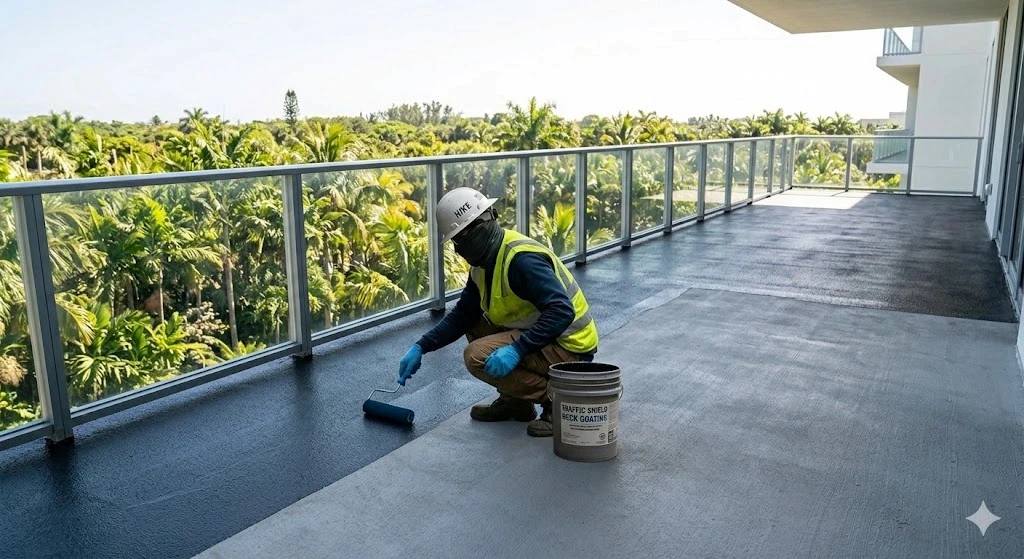
We strip failed coatings, repair underlying damage, prep the substrate properly, and install a fluid-applied or membrane system engineered for the deck's traffic, sun, and water exposure. Edges, seams, and penetrations get extra attention because that's where most failures begin. The result is a deck system that actually does its job for the long term.
Types of Deck Waterproofing Systems
Not all deck waterproofing systems are the same — and using the wrong system for a given deck application is one of the most common and costly mistakes in South Florida's construction market. Pedestrian decks over occupied space require flexible, crack-bridging liquid-applied membranes that handle foot traffic without cracking at minor slab movements. Vehicular decks in parking structures require heavy-duty traffic coating systems rated for wheel loads and fuel resistance — elastomeric products formulated for the chemical and mechanical demands of vehicle traffic. Pool decks require coatings with UV stability, slip resistance, and chemical resistance appropriate for chlorine exposure. Rooftop decks over occupied space require fully adhered waterproofing membranes with the same performance standards as roofing systems. Planet Construction FL specifies the system that matches each deck's actual use conditions — not whatever happens to be in stock.
Elevated Deck Waterproofing — The Highest Stakes
Elevated decks over occupied or enclosed spaces carry the highest consequence of waterproofing failure. Water infiltrating through an elevated deck doesn't just damage the deck — it damages the structure below, the interior finishes, the equipment, and the occupants and contents of the space beneath. In Fort Lauderdale's condo buildings, elevated pool decks and amenity decks over parking garages represent some of the most waterproofing-intensive surfaces in the building, receiving the most foot traffic, the most chemical exposure, and in many cases the least maintenance attention. Planet Construction FL treats elevated deck waterproofing with the same rigor as roofing — complete membrane coverage, positive drainage slope, fully detailed penetrations and drains, and quality control inspection at every phase before the surface coating is applied.
Traffic Coatings for Deck Surfaces
Traffic coatings serve a dual purpose on deck surfaces — they provide the waterproofing protection the deck needs while also delivering the surface durability, traction, and appearance appropriate for the level of foot or vehicle traffic the deck receives. Pedestrian traffic coatings are typically elastomeric systems with aggregate broadcast for slip resistance — flexible enough to bridge hairline cracks, durable enough to handle daily foot traffic in South Florida's UV environment. Vehicular traffic coatings are heavier-duty systems — polyurethane or epoxy-polyurethane hybrids — designed to handle wheel loads, fuel and oil exposure, and the abrasion that vehicle tire contact imposes on the surface. Planet Construction FL matches the traffic coating specification to the measured traffic demands of each deck, not a single product used across every project.
Deck Waterproofing Process
Deck waterproofing begins with a surface condition survey — crack mapping, drain inspection, assessment of any existing coating or membrane, and moisture testing of the slab. All cracks are repaired before any membrane is applied — waterproofing over active cracks without repair produces a membrane that bridges the crack today and fails when the crack moves tomorrow. The existing surface is prepared to the profile required by the waterproofing system — shot blasting or grinding removes old coatings, laitance, and contamination. The membrane system is applied in the specified sequence of primer, base coat, and finish coat to specified thickness. Expansion joints and drain collars receive dedicated detail work. The completed installation is inspected for coverage, thickness, and joint integrity before the project is accepted.
Frequently Asked Questions
How long does deck waterproofing last in Fort Lauderdale?
Pedestrian deck elastomeric systems typically last 10–15 years in South Florida's UV and humidity environment. Vehicular traffic coatings on parking decks last 5–10 years, depending on traffic volume and whether the surface is exposed to direct sun. UV exposure is the primary aging factor — surfaces in direct sun degrade faster than covered or shaded areas. Annual inspection and prompt repair of isolated failures extend system life significantly between full recoating cycles.
Can deck waterproofing be done while the deck is in use?
Yes — in sections. We phase deck waterproofing in defined work zones, maintaining access to portions of the deck while other sections are being prepared and coated. Each zone is closed during preparation and coating application and reopened after the specified cure period. For amenity decks in occupied condominium buildings, we coordinate the phasing schedule with the property manager to minimize resident impact and maintain access to building entrances throughout the project.
How do I know if my deck's waterproofing has failed?
Visual signs of deck waterproofing failure include peeling or blistering of the existing coating, visible cracks in the membrane surface, water staining or efflorescence on the deck surface or at the edges, and — most critically — water stains or active leaking on the ceiling of the space below the deck. If any of these signs are present, schedule a professional assessment immediately — the longer water infiltration continues through a deck, the more extensive the structural damage that accumulates below.
Do deck waterproofing projects require permits?
Surface coating and recoating of deck surfaces typically does not require a permit. Structural repairs to the deck slab, drain replacement, or waterproofing work that is part of a broader structural restoration or repair project will require permits. We assess permit requirements during the initial project scope development and handle all permit filings where required.