Concrete Crack Repair in Fort Lauderdale, FL
Not every crack is cosmetic — and not every crack needs the same fix. We assess severity, choose the right method, and seal cracks against water and movement.
Licensed
4.8-Star Rated
Free Estimates
Right Crack, Right Method, Right Result
Concrete crack repair in Fort Lauderdale covers a wide spectrum — from hairline surface cracks that are primarily cosmetic to structural fractures that compromise load-carrying capacity and open pathways for the moisture and chlorides that accelerate South Florida concrete deterioration. Every crack in concrete deserves professional evaluation, because the same-looking surface crack can have very different causes and very different structural implications depending on where it is, how wide it is, and how it developed. At Planet Construction FL, we diagnose concrete cracks accurately and repair them with the method matched to the cause — not just the appearance.
Not All Cracks Are Created Equal
A crack in concrete can mean almost anything — from harmless surface shrinkage to active structural failure. Treating every crack the same way wastes money on the simple ones and dangerously underprepares for the serious ones. Most failed crack repairs aren't bad workmanship; they're the wrong method applied to the wrong type of crack.
The Right Method for Every Type of Crack
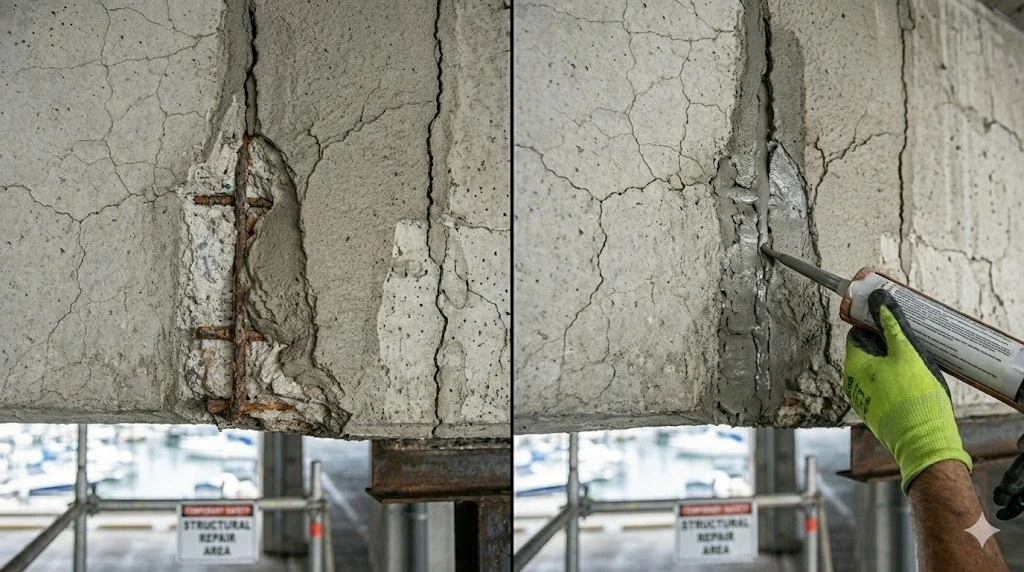
We assess every crack first: width, depth, movement, and whether it's structural or cosmetic. From there, we use the right method — epoxy injection for structural cracks, polyurethane for moving or wet cracks, surface sealers for hairlines, and routing-and-sealing where it makes sense. Matching the method to the crack is what makes the repair last.
Types of Concrete Cracks and What They Mean
Understanding crack type is the foundation of effective concrete crack repair. Shrinkage cracks — hairline-width cracks that form as concrete cures and contracts — are common and often cosmetic, though they still require sealing in South Florida's chloride environment. Settlement cracks occur when the soil or substrate beneath a slab moves unevenly, typically producing a stepped pattern where one side of the crack is higher than the other. Structural cracks in beams and columns — particularly diagonal cracks near member ends or at 45-degree angles — indicate shear stress and require engineering assessment. Post-tension tendon cracks in residential slabs follow the tendon layout in a grid pattern and have specific repair requirements. Active cracks that change width with temperature require flexible repair systems; dormant cracks can be rigidly bonded with epoxy injection.
Structural vs. Cosmetic Cracks — The Critical Distinction
The most important judgment call in concrete crack repair is determining whether a crack is structural or cosmetic. Cosmetic cracks do not affect load-carrying capacity and are primarily a waterproofing and aesthetics concern. Structural cracks compromise load capacity and create liability if unaddressed. Key indicators of structural concern: crack width greater than 0.010 inches; diagonal orientation in beams, columns, or walls; cracks accompanied by visible deflection or displacement; through-cracks in load-bearing walls; and cracks in post-tensioned elements of any width. Planet Construction FL evaluates every crack against these criteria and recommends structural engineering review when structural concern exists — before any repair work begins.
Crack Repair Methods We Use
Planet Construction FL uses the full range of concrete crack repair methods, selected based on crack type, width, activity, and moisture condition. Epoxy injection — injecting two-component structural epoxy under low pressure — is used for dormant structural cracks where bonding crack faces and restoring structural continuity is the objective. Polyurethane foam injection is used for active water-bearing cracks where the foam expands and seals the water pathway in the presence of moisture. Routing and sealing — saw-cutting a reservoir along the crack and filling with flexible polyurethane sealant — addresses moving cracks where rigid bonding would create a new crack adjacent to the repair. Surface sealing with penetrating silane or film-forming sealers is used for tight hairline cracks that require waterproofing rather than structural repair.
Preventing Future Cracks in South Florida Concrete
Concrete cracking in South Florida's climate is often preventable with the right protective measures. Penetrating silane sealers applied to horizontal surfaces dramatically reduce water absorption and chloride penetration — slowing the moisture-driven deterioration cycle that leads to cracking and spalling. Elastomeric coatings on vertical surfaces bridge micro-cracks and prevent water entry at the surface. Proper joint spacing in new concrete work controls where shrinkage cracking occurs — placing it at intentional control joints rather than randomly through the slab. For existing buildings with a history of recurring cracking, Planet Construction FL develops a systematic inspection and protection program that catches new cracks early and applies protective coatings on a maintenance schedule — preventing the progression from crack to infiltration to spalling to structural damage.
Frequently Asked Questions
Are all concrete cracks a problem in Fort Lauderdale?
Not all cracks are immediate structural emergencies, but all cracks in South Florida's climate are moisture infiltration risks. Even hairline cracks that pose no structural concern provide a pathway for salt-laden water to reach embedded rebar — starting the corrosion cycle that eventually causes structural damage. In Fort Lauderdale's environment, we recommend sealing all visible concrete cracks regardless of their structural significance.
How do I tell if a crack is getting worse?
The most reliable method is crack monitoring with crack gauges — small scale markers installed across the crack that allow precise measurement of width changes over time. A simpler approach is photographing the crack with a scale reference and checking periodically. A crack that changes width with temperature cycling is active and requires flexible repair. A crack that remains constant over several months may be dormant and suitable for rigid epoxy bonding.
How long does concrete crack repair take?
Simple surface sealing or routing and sealing of a typical crack takes 1–2 hours. Epoxy injection of a structural crack takes 3–6 hours for port installation and injection, plus 24–48 hours for curing before return to service. Larger projects with multiple crack locations are scoped and scheduled based on the full repair inventory developed during our assessment.
What causes concrete cracks to appear suddenly after heavy rain?
Heavy rain events in South Florida can reveal cracks previously hidden by dry concrete's appearance — moisture saturating the concrete makes cracks visible by darkening the surrounding area. More concerning is a crack that actively leaks water during or after rain, which indicates a through-crack in a waterproofed element and requires immediate repair to prevent moisture infiltration and structural damage downstream.