Wall Spall Repair in Fort Lauderdale, FL
Spalled walls mean rebar is rusting and pushing concrete outward. We stop the corrosion at the source and restore the wall's structural skin before it spreads further.
Licensed
4.8-Star Rated
Free Estimates
Repair Walls That Are Pushing Themselves Apart
Wall spall repair in Fort Lauderdale addresses one of the most common forms of concrete deterioration affecting South Florida's buildings — the progressive loss of the concrete surface layer on walls driven by the rebar corrosion happening just beneath. From parking garage walls to exterior building facades and interior structural walls, spalling concrete is both a structural warning and a liability. At Planet Construction FL, we repair wall spalling completely — removing all compromised concrete, treating the rebar, and restoring the wall to a sound, finished condition that holds up in South Florida's demanding climate.
Spalled Walls Are Walls Coming Apart
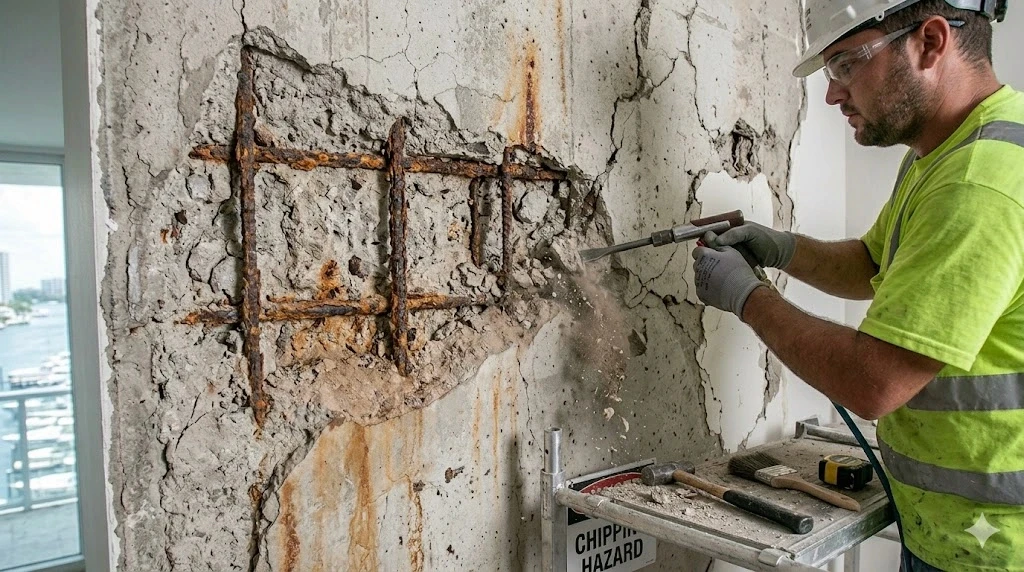
Spalling walls are walls under attack from the inside. Rebar inside the wall is corroding, expanding, and pushing the concrete face outward until pieces break free. The visible damage is always smaller than the corrosion zone behind it, and skim-coating over it traps the rust to keep working in the dark.
We Fix the Cause, Not Just the Surface
Our crews chip out the damaged area down to sound concrete, expose and treat the corroded rebar, and replace any steel beyond saving. We rebuild the wall section with high-strength mortar and apply a protective coating to slow future corrosion. The wall comes back to its original strength and finish, and the underlying problem doesn't come back with it.
What Causes Concrete Wall Spalling?
Wall spalling in Fort Lauderdale's buildings follows a predictable sequence: salt air or moisture penetrates the concrete cover layer and reaches the embedded rebar, triggering corrosion. Corroding steel expands by up to four times its original volume — and as it does, it applies internal pressure that fractures and lifts the concrete cover away from the wall face. The result is exposed rebar, ragged edges of broken concrete, and progressive surface loss that continues until the corrosion is stopped and the concrete is rebuilt. On exterior walls, wind-driven coastal rain accelerates chloride penetration. On interior walls adjacent to parking decks or wet areas, moisture migration through the slab drives the same process from the inside.
Interior vs. Exterior Wall Spall Damage
Interior wall spalling most commonly occurs in parking garages, at the base of stairwells, and on walls adjacent to drainage areas or wet mechanical spaces. The spalling pattern often follows rebar placement — horizontal or vertical lines of damage corresponding to the underlying reinforcement grid. Exterior wall spalling is driven primarily by direct weathering and salt air exposure. South Florida's coastal buildings — particularly those facing east or southeast into prevailing salt-air winds — show accelerated exterior spalling patterns compared to inland properties. Both interior and exterior spalling require the same fundamental repair approach: full removal of compromised concrete, rebar treatment, and mortar restoration — but exterior repairs require additional surface protection suited to outdoor weathering conditions.
Our Wall Spall Repair Process
Wall spall repair starts with a sounding survey — mapping all delaminated and compromised areas by tapping the wall surface and documenting hollow zones. This step is critical because visible spalling is rarely the full extent of the problem; delaminated concrete that hasn't yet fallen is a safety and quality risk. All compromised concrete is chipped to the full extent of delamination and beyond, to sound, well-bonded substrate. Exposed rebar is wire-brushed, treated with corrosion inhibitor primer, and assessed for section loss. FDOT-approved repair mortars are applied in bonded layers to restore the full wall profile. Exterior repairs receive a compatible surface coating — elastomeric paint, waterproofing coating, or matching stucco finish — to protect the restored concrete from re-exposure.
Preventing Future Wall Spalling
The most effective prevention for concrete wall spalling is a comprehensive surface protection system — applied after repair and maintained on schedule. Elastomeric waterproofing coatings on exterior walls provide a crack-bridging, vapor-permeable moisture barrier that dramatically reduces chloride penetration. Penetrating silane/siloxane sealers are effective on interior garage walls where appearance is less important than moisture resistance. Joint sealants at wall-to-floor and wall-to-ceiling interfaces prevent water tracking behind the wall surface. Planet Construction FL designs the protection system appropriate to each wall's exposure conditions and includes protection in every wall spall repair scope — because a repaired wall that isn't protected will spall again.
Frequently Asked Questions
Is wall spalling a structural emergency?
Wall spalling on non-structural partition walls is primarily a maintenance concern — though it still requires repair to prevent moisture infiltration. Spalling on load-bearing shear walls, structural columns, or walls that are part of the lateral force-resisting system of the building is a structural concern requiring professional assessment. If you're unsure whether a spalling wall is structural, schedule an inspection — misclassifying a structural wall as cosmetic has serious consequences.
How much concrete needs to be removed during wall spall repair?
All concrete that is delaminated or compromised must be removed — not just the pieces that have already fallen. We use sounding to map the full extent of delamination beyond visible damage and remove all material within that zone. Leaving compromised concrete in place as a base for new mortar produces an early repair failure. Complete removal before rebuilding is non-negotiable for a lasting repair.
Can you match the existing wall finish after repair?
Yes. Interior garage walls are typically finished with a smooth or sand-float texture that we can match with the repair mortar finish. Exterior wall repairs are finished with stucco or elastomeric coating to match the surrounding surface. Perfect invisibility on aged or weathered surfaces isn't always achievable, but a professional repair is far less conspicuous than unrepaired spalling.
How long does wall spall repair take?
A typical wall spall repair covering 50–200 square feet of affected area takes 3–5 days from chipping through mortar application and cure. Larger projects covering multiple wall sections or full garage bays are staged across multiple days or weeks depending on scope. We provide a detailed schedule as part of our project proposal.