Concrete Sealing Service in Fort Lauderdale, FL
Unsealed concrete absorbs water, salt, and stains — accelerating wear and corrosion. We apply penetrating sealers that protect from the inside out, without changing the look.
Licensed
4.8-Star Rated
Free Estimates
Long-Term Protection You Can't See — But You'll Feel
Concrete sealing in Fort Lauderdale is the smartest, most cost-effective maintenance investment you can make in your concrete surfaces. South Florida's salt air, intense UV, heavy rainfall, and high humidity attack unprotected concrete relentlessly — accelerating the surface erosion, staining, and rebar corrosion that turn a minor maintenance task into a major structural repair. At Planet Construction FL, we apply the right sealing system for each concrete surface type, creating a protective barrier that dramatically extends surface life and reduces long-term maintenance costs.
Concrete Soaks Up Everything It Touches
Unsealed concrete is a sponge. It absorbs water, salt, oil, fertilizer, and chlorides — all of which feed into the rebar and surface damage that shortens the slab's life. Most owners don't think about sealing until the staining and surface breakdown are already obvious, and by then a lot of the damage is permanent.
Sealers That Protect From the Inside Out
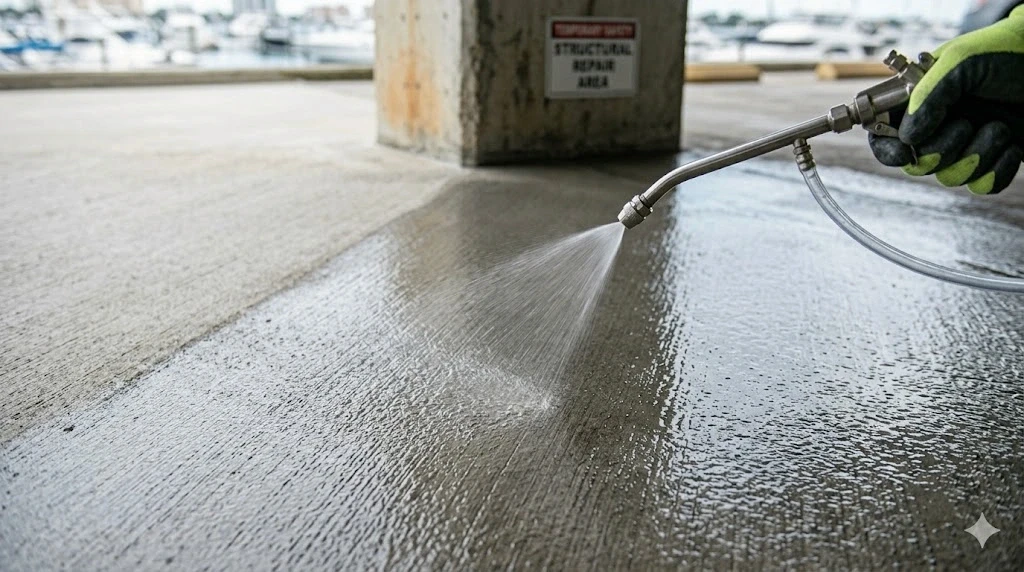
We use penetrating sealers that soak into the concrete and bond chemically — protecting from the inside instead of just sitting on top. The result is concrete that resists water, salt, oil, and stains for years, with no change to surface appearance and no slick film to wear off. Different applications get different products, matched to the exposure.
Why Sealing Concrete in Fort Lauderdale Is Essential
Concrete is inherently porous. Without sealing, every rainstorm, irrigation cycle, and salt air event delivers moisture and chlorides directly into the concrete matrix — beginning the slow deterioration chain that leads to staining, surface erosion, and eventually rebar corrosion. In Fort Lauderdale's coastal climate, unsealed concrete surfaces degrade significantly faster than sealed ones. Driveways develop surface erosion and oil staining. Pool decks fade, pit, and become slippery. Concrete walkways stain from organic debris and tannins from South Florida's lush landscaping. Parking garage and commercial floors absorb oil, chemical, and tire rubber contamination that is difficult to remove without proper surface sealing. A professionally applied sealer prevents all of this and reduces cleaning requirements dramatically.
Types of Concrete Sealers We Apply
Selecting the wrong sealer for a given application produces disappointing results that fail prematurely. Penetrating sealers — silane, siloxane, or siliconate-based — soak into the concrete surface and chemically react with the concrete matrix to line the pores with a hydrophobic barrier. They leave no visible surface film and allow vapor transmission — making them ideal for exterior flatwork, walls, and any surface where breathability is important. Film-forming sealers — acrylic, epoxy, or polyurethane-based — create a surface coating that provides moisture resistance and a decorative sheen. They enhance color and give driveways, pool decks, and decorative concrete a polished, finished look. Planet Construction FL specifies the sealer type appropriate to each surface's exposure conditions and appearance goals — never a one-product-fits-all approach.
Concrete Sealing Applications in Fort Lauderdale
Our concrete sealing services cover every surface type found in South Florida's residential and commercial properties. Driveways receive penetrating sealers or acrylic film-forming sealers protecting against oil staining, surface erosion, and UV color fade. Pool decks are sealed with UV-stable, slip-resistant acrylic or polyurethane products appropriate for the pool environment. Parking garage floors and commercial concrete floors receive heavy-duty epoxy or polyurethane sealers designed for vehicle traffic and chemical exposure. Exterior building walls, columns, and walkways are treated with penetrating silane sealers that reduce chloride penetration rates dramatically without altering surface appearance. Decorative stamped concrete and overlays are sealed with UV-stable products that protect color and texture for years between maintenance applications.
How Often to Re-Seal Concrete in South Florida
South Florida's intense UV and heavy rainfall shortens sealer service life compared to other climates. Film-forming acrylic sealers on exterior flatwork typically require reapplication every 2–3 years, as UV radiation breaks down the polymer binder. Polyurethane and epoxy sealers last longer — typically 5–7 years in exterior applications. Penetrating silane sealers on walls and vertical surfaces may last 5–10 years before reapplication is needed. Annual inspection of sealed surfaces — checking for water beading, color fade, and surface wear — is the best maintenance practice. Resealing before the existing sealer fails completely is always more effective and less expensive than waiting for unsealed concrete to begin deteriorating.
Frequently Asked Questions
How long after new concrete is poured should I seal it?
New concrete should cure for a minimum of 28 days before applying a permanent sealer — this allows the curing process to complete and ensures the sealer bonds to fully hardened concrete. During the initial 28-day period, a curing compound may be applied by the contractor to retain moisture for proper strength gain. Some penetrating sealers require 60–90 days of cure before application — product-specific guidance always applies.
Can I seal concrete myself or should I hire a professional?
DIY sealer application is possible, but professional application produces consistently better results. Surface preparation — cleaning, degreasing, and profiling the concrete before sealer application — is the step most often shortcut in DIY applications, and inadequate preparation leads to sealer delamination and peeling within months. Planet Construction FL's professional application includes complete surface preparation, correct sealer specification, and application at proper coverage rates for full protection.
Will concrete sealing change the appearance of my driveway or deck?
Penetrating sealers are virtually invisible — they don't change the concrete's appearance. Film-forming sealers in matte or satin sheen enhance the natural color slightly. Wet-look or high-gloss acrylic sealers significantly darken and intensify the concrete's color, giving it a polished, freshly wet appearance. We show you sheen level options before application so the final look matches your expectations.
Can sealing stop water from coming through concrete?
Sealers significantly reduce water absorption and surface penetration, but they are not substitutes for a proper waterproofing system where hydrostatic pressure is a factor. For concrete under direct water pressure — below-grade walls, planters, water features — a full waterproofing membrane system is required. For above-grade surfaces exposed to rainfall, a properly applied penetrating or film-forming sealer provides excellent moisture resistance.