Concrete Waterproofing in Fort Lauderdale, FL
Florida's wet season finds every weak point in unprotected concrete. We seal slabs, walls, and decks against moisture intrusion — protecting both finish and rebar for decades.
Licensed
4.8-Star Rated
Free Estimates
Stop Water Before It Reaches the Rebar
Concrete waterproofing in Fort Lauderdale is one of the smartest investments a property owner can make — because water is the single greatest threat to concrete structures in South Florida. Every crack, unsealed joint, and unprotected surface is an entry point for moisture that quietly accelerates rebar corrosion, structural spalling, and mold growth. At Planet Construction FL, we install concrete waterproofing systems engineered specifically for Florida's climate — protecting your building's structure, your interior spaces, and your long-term maintenance budget.
Unsealed Concrete Is a Time Bomb
Concrete looks solid, but it's actually porous — and Florida's rain, humidity, and salt air push moisture in through every micro-crack and pinhole. Once water reaches the rebar inside, corrosion begins, and that corrosion is what eventually cracks slabs, walls, and decks from the inside out. Unsealed concrete in this climate is on a countdown, whether you can see the damage or not.
Sealing Systems Engineered for the Climate
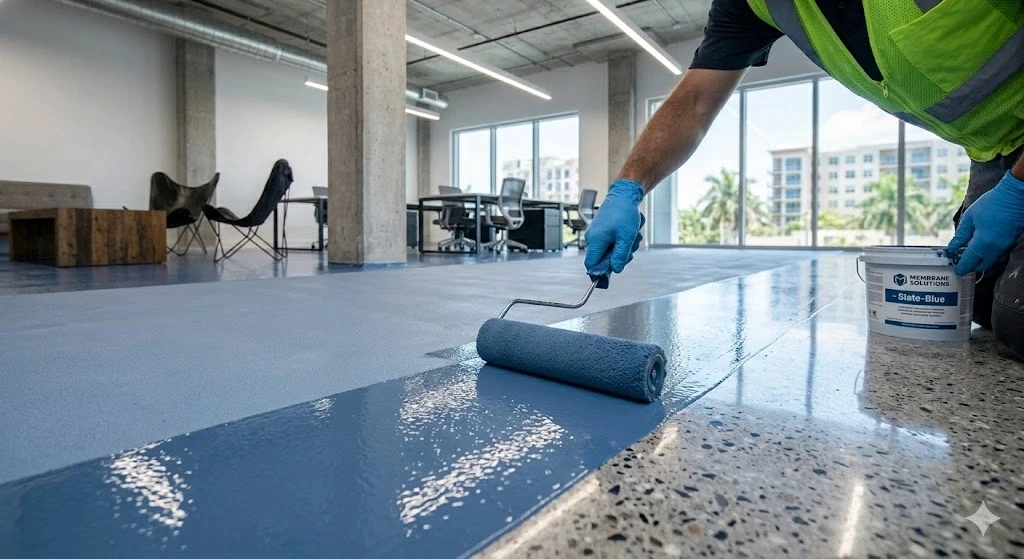
We use the right product for the application — penetrating sealers for slabs and walls, elastomeric coatings for decks and balconies, and crystalline or cementitious systems for below-grade and water-contact areas. Every application starts with proper surface prep, because waterproofing only works as well as what's underneath it. The result is concrete that resists moisture intrusion for years, not months.
Why Concrete Waterproofing Matters in South Florida
South Florida receives over 60 inches of rainfall annually, combined with salt-laden coastal air and year-round humidity that keeps concrete surfaces perpetually exposed to moisture. Unprotected concrete is porous — it absorbs water, allows chlorides to penetrate to the rebar, and provides a pathway for moisture into building interiors. The consequences compound over time: rebar corrodes and expands, spalling begins, structural capacity is compromised, and interior water damage follows. Concrete waterproofing interrupts this cycle at the source, sealing the concrete surface and directing water away from the structure rather than through it.
Waterproofing Methods We Use
The right waterproofing system depends on the surface type, exposure conditions, and the degree of existing moisture penetration. Planet Construction FL installs crystalline waterproofing compounds for below-grade and wet-area applications, where the product migrates into concrete pores and forms water-blocking crystals throughout the slab. For exposed decks and parking structures, elastomeric sheet membranes or liquid-applied membrane systems provide flexible, crack-bridging protection across the full surface. Penetrating silane/siloxane sealers are used on above-grade walls and columns to repel water while allowing vapor transmission. Every system is selected based on the specific surface conditions and performance requirements of each project.
Sealers vs. Membranes vs. Coatings — What's the Difference?
Penetrating sealers (silane, siloxane, or siliconate-based) soak into the concrete surface and line the pores to repel water. They leave no visible surface film and are ideal for walls, columns, and horizontal surfaces that will remain exposed. Membranes — sheet-applied or liquid-applied — form a continuous waterproof barrier on the concrete surface, providing higher protection levels for decks, rooftop applications, and below-grade walls. Traffic coatings are heavy-duty elastomeric systems designed for surfaces subject to vehicular or pedestrian traffic — they waterproof and protect simultaneously. We specify the correct system for each surface and condition, not a one-size-fits-all product.
Florida Climate Challenges for Concrete Waterproofing
Waterproofing systems installed in South Florida face conditions that test their durability more aggressively than most markets. Intense UV radiation degrades elastomeric coatings faster than in northern climates — UV-stable formulations are non-negotiable. Thermal cycling from Florida's heat — surfaces reaching 180°F under direct sun — demands products with high movement accommodation. Salt air chemically attacks certain membrane types over time. Ponding water from South Florida's intense rain events stresses every seam and joint detail. Planet Construction FL selects waterproofing products with Florida-specific performance histories and installs them with details — particularly at penetrations and joints — that reflect real-world Florida conditions.
Our Waterproofing Installation Process
Successful waterproofing starts with surface preparation — the most critical step that contractors most often shortcut. Existing coatings are removed, contaminated concrete is cleaned or replaced, and the surface is profiled to the standard required by the waterproofing system specification. All cracks are repaired before the membrane or sealer is applied, because coating over active cracks just delays failure. Expansion joints and penetrations receive dedicated detailing — flexible, compatible sealants that move with the structure. The waterproofing system is applied in specified coats to specified thickness, and the completed installation is tested for pinholes, voids, and joint integrity before the project is accepted.
Frequently Asked Questions
How long does concrete waterproofing last?
Lifespan depends on the system type and exposure conditions. Penetrating sealers typically last 5–10 years before reapplication. Elastomeric membrane systems installed to manufacturer specifications typically carry 10–20 year warranties when properly maintained. Traffic coatings on parking decks are usually recoated every 5–10 years depending on traffic volume and UV exposure.
Can waterproofing stop existing water intrusion?
Yes — in most cases. The extent of protection depends on identifying and treating every entry point. Positive-side waterproofing (applied to the water-facing surface) is most effective. Negative-side or interior-applied crystalline products can also be effective where exterior access is limited. We assess active leak conditions as part of our project scope to specify the right solution.
Do I need to repair cracks before waterproofing?
Absolutely. Applying waterproofing over active cracks without repairing them first means the membrane bridges the crack today but fails when the crack moves tomorrow. Our waterproofing scope always includes crack repair and joint preparation as prerequisite work — no exceptions.
Is concrete waterproofing required for 40-year recertification?
Waterproofing is not always a specific recertification requirement, but inspectors routinely flag water infiltration and evidence of moisture damage as deficiencies that must be addressed. In practice, resolving water infiltration findings in a recertification or SB 4-D inspection almost always involves waterproofing work. We integrate waterproofing into our recertification repair scopes as needed.