Concrete Floor Polishing in Fort Lauderdale, FL
Polished concrete is durable, low-maintenance, and modern. We grind, hone, and polish slabs to the gloss level you want — for showrooms, garages, retail, and homes.
Licensed
4.8-Star Rated
Free Estimates
Smooth, Hard, Low-Maintenance Floors
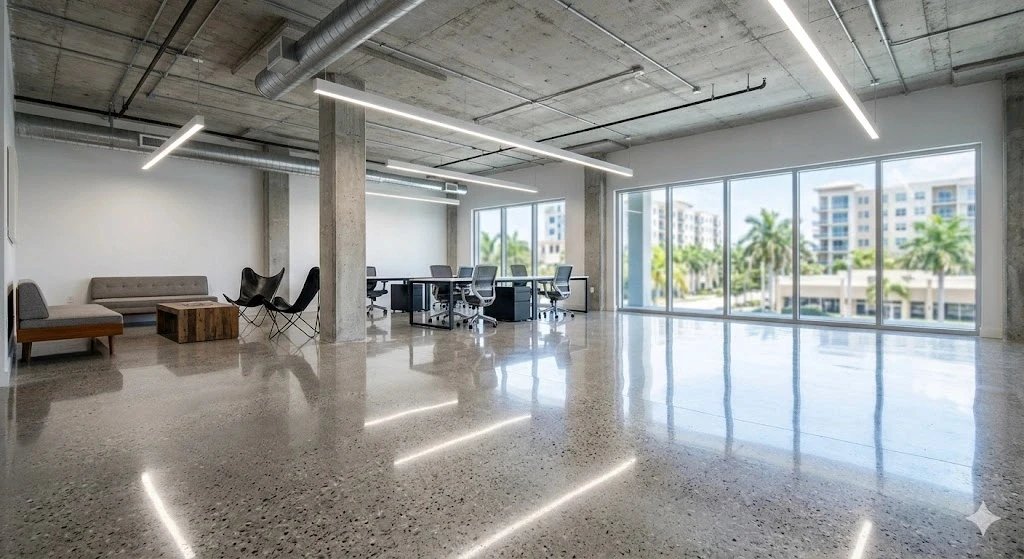
Concrete floor polishing in Fort Lauderdale transforms ordinary gray slabs into durable, attractive, low-maintenance floors that complement modern residential and commercial interiors throughout South Florida. Polished concrete has become one of the most popular flooring choices in Fort Lauderdale's commercial spaces, retail environments, restaurants, and high-design residential homes — and for good reason. It's exceptionally durable, easy to maintain, reflects light beautifully, and in South Florida's warm climate, stays naturally cool underfoot. At Planet Construction FL, we deliver polished concrete floors at every level of sheen and finish — from matte to mirror-bright.
Sealed and Painted Floors Don't Last
Painted, sealed, and tile-covered concrete floors all share the same problem: they wear out, peel, crack, or chip — and replacing them gets expensive fast. Most coatings can't handle the moisture and traffic of Florida garages, warehouses, showrooms, or commercial spaces, so owners end up redoing the floor every few years.
A Floor Finish That Lasts Decades
We grind the slab in stages — from coarse to fine — to expose, flatten, and densify the concrete surface. Then we apply chemical hardeners and polish to your desired gloss level. The result is a floor that's hard, low-maintenance, stain-resistant, and built to last decades without recoating. Works for showrooms, garages, retail, warehouses, and homes.
Benefits of Polished Concrete Floors
Polished concrete delivers a compelling combination of performance and aesthetics that few flooring materials can match at its price point. Durability is the headline advantage — properly polished and densified concrete is harder than the original slab surface, resisting abrasion, impact, and surface wear far better than unpolished concrete. Unlike tile, hardwood, or carpet, there are no grout joints to stain, no finish to peel, and no replacement cycles to budget for. Maintenance is minimal — daily dust mopping and periodic wet mopping with a neutral cleaner are all that is required to maintain appearance. In South Florida's warm climate, polished concrete stays naturally cooler than carpet and is far more comfortable than tile in high-humidity environments. The reflective surface of polished concrete also improves ambient lighting in commercial and retail spaces, reducing artificial lighting requirements.
Residential Polished Concrete in Fort Lauderdale
Polished concrete has found a natural home in Fort Lauderdale's modern residential market. The seamless, minimalist aesthetic of polished concrete floors complements the open-plan, indoor-outdoor living designs that define South Florida architecture. Existing concrete slabs in South Florida homes are typically poured at four inches thick — suitable for polishing in most cases. Polished concrete in residential applications is often combined with acid staining or reactive dyes that add color depth and a variegated appearance mimicking natural stone or terrazzo. Sheen levels in residential applications typically range from matte (Level 1–2) to satin (Level 3) — providing the look of polished concrete without the full reflective brightness that works better in commercial applications. Radiant heating can be integrated beneath polished concrete floors in new construction for year-round comfort.
Commercial Polished Concrete in Fort Lauderdale
Commercial applications for polished concrete in Fort Lauderdale span retail showrooms, restaurants, hotels, office lobbies, healthcare facilities, and warehouse and industrial floors. In high-traffic retail and hospitality environments, polished concrete's durability is a major operational advantage — it doesn't show wear patterns the way carpet does, and unlike vinyl or laminate flooring, it won't need replacing every 5–10 years. Industrial and warehouse applications benefit from polished concrete's resistance to forklift traffic, pallet loads, and chemical spills. In food service environments, polished and densified concrete provides an impermeable surface that resists bacterial growth and cleans easily. Planet Construction FL matches the sheen level, color treatment, and surface hardness to the specific demands of each commercial application.
Polishing Levels & Process
Concrete polishing is a multi-step diamond grinding and honing process that progressively refines the concrete surface from coarse to fine. The process begins with coarse diamond tooling that removes surface irregularities, old coatings, and surface contamination. Each successive step uses finer diamond tooling, building the surface refinement that produces the desired sheen level. A densifier — typically lithium silicate — is applied mid-process to chemically harden the concrete surface, dramatically increasing scratch resistance. Final steps with very fine diamond tooling bring the surface to the specified sheen — from matte through salt-and-pepper aggregate exposure to full mirror-bright reflective polished finish. A guard coat is applied at the end to provide stain resistance and protect the polished surface from South Florida's humidity and occasional spills.
Frequently Asked Questions
Can any concrete floor be polished?
Most concrete floors can be polished, but the starting condition of the slab affects the process and final result. Slabs with significant cracks, pitting, or surface contamination require repair and preparation before polishing. Very soft concrete — common in older South Florida construction — may require densifier application before polishing is practical. We assess each floor during our initial site visit to confirm suitability and identify any preparation steps needed before polishing begins.
How long does concrete floor polishing take?
A 1,000 square foot residential floor typically takes 2–3 days from initial grinding through final sheen and guard coat application. Larger commercial floors of 5,000–20,000 square feet typically take 5–10 days. The number of grinding and honing steps required depends on the starting condition of the slab and the specified final sheen level — higher sheen levels require more steps and more time.
Is polished concrete slippery when wet?
Polished concrete at lower sheen levels (matte to satin) provides adequate traction in normal dry conditions. High-gloss polished concrete can be slippery when wet — similar to polished tile. For commercial and residential applications where wet conditions are expected, we apply a non-slip additive to the final guard coat, or recommend a satin sheen level that provides better traction. In pool areas and outdoor applications, polished concrete without a non-slip treatment is not appropriate.
How do you maintain polished concrete floors in South Florida?
Daily dust mopping or auto-scrubbing removes grit that can scratch the polished surface over time. Wet mopping with a neutral pH cleaner (never acidic or alkaline cleaners, which etch the surface) maintains appearance. Annual burnishing with a high-speed floor machine restores surface gloss between full re-polishing cycles. Avoid dragging heavy objects directly across polished concrete, and use soft pads under furniture legs to prevent localized scratching on residential floors.